Building a website for lawyers, CAs and consultants, in detail
People looking for an advocate, a chartered accountant or a consultant usually have a specific problem and want to know quickly whether you handle it, where you are and how to reach you. This is how I plan and build websites for law practices, CA firms and consultants in India: practice area pages, professional rules, consultation requests, articles and local search. What clients look for in lawyer and CA websites covers the client's side.
A professional website project, step by step
- Free review and a fixed quote. Send your current site or profile, your practice areas or services and the cities you work in.
- Page plan. We list the practice areas or services that deserve their own page, and note what your professional rules allow you to say.
- Content. Profiles with qualifications and enrolment or membership details, service descriptions and office details. You write or approve every professional statement.
- Build on staging. Service templates, consultation forms, an articles section and the disclaimer, at a private address.
- Testing. Test requests sent to confirm they reach the right partner, and every page checked on phones.
- Launch and walkthrough. Search Console connected, your Google Business Profile linked, and a call showing your team how to publish an article.
Advocate, CA or consultant: what the website can say
Professional rules differ, and they shape the copy more than the design does.
| Advocates and law firms | Chartered accountants | Tax, business and other consultants | |
|---|---|---|---|
| Rules to check | Bar Council of India rules on advertising and solicitation | ICAI's Code of Ethics and its guidance on members' websites | No single professional body, but rules against misleading claims still apply |
| Typical content | Name, contact details, enrolment, qualifications and areas of practice, stated factually | Firm and partner details, qualifications and services, within ICAI guidance | Services, process, case studies and fees if you choose |
| Testimonials and success claims | Leave them out | Check current ICAI guidance first | Fine if genuine and verifiable |
| Disclaimer | Commonly shown before visitors enter | Useful on articles and updates | Useful on articles and updates |
This is a starting point, not legal advice, so check the current version of your body's rules before launch. What the Bar Council rules allow covers advocates in more detail.
Practice area and service pages
A page for each area you handle, such as property disputes, matrimonial matters, GST registration and returns, income tax notices or company incorporation, does two jobs. It tells a visitor in plain language whether you handle their situation, and it gives Google a specific page for that search. Each page covers who it is for, the situations you commonly handle, how the process usually runs and the documents to keep ready. For advocates the tone stays factual, with no "best" or "top" and no promised outcomes.
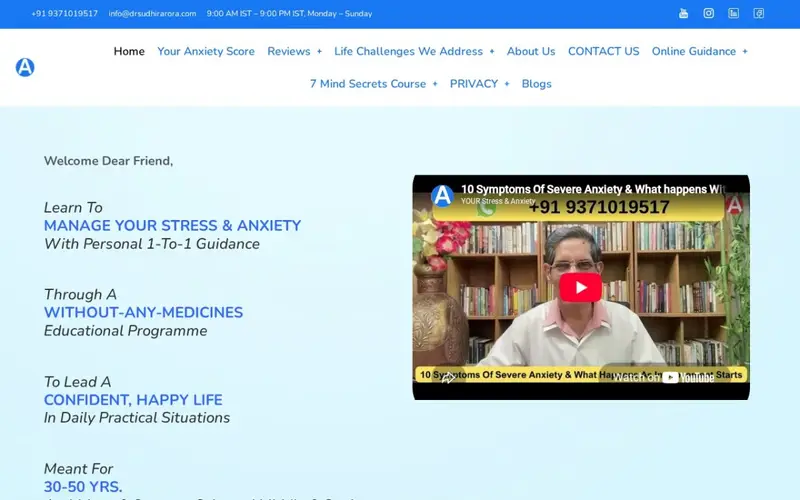
Dr. Sudhir Arora's site, from another profession, is a good model of precision: it gives his degree, medical college, year and registration number, and is just as clear about what his programme does not replace. Professionals gain from the same honesty about scope, such as which courts or tribunals you appear before, or the kinds of matters you do not take on.
Consultation requests that respect confidentiality
- A short form: name, phone, city, a matter type dropdown and a brief outline, with a note asking visitors not to send confidential details before you have agreed to act.
- No file uploads on public forms. Documents are shared later through a channel your office controls.
- WhatsApp and tap-to-call on every page, with the first message pre-filled, as on the Dr. Sudhir Arora consultation page.
- Calendar booking for paid consultations, if you already use a scheduling tool, embedded rather than rebuilt.
- A consent line and privacy notice, because enquiries often contain personal details. The DPDP Act and your website explains the basics.
Articles and legal updates that stay current
Articles that explain a law, a deadline or a process in general terms are some of the most useful content a practice can publish, and they suit advocates when they stay educational. Each article carries a date, the author's name and a line saying it is not legal or tax advice. Old articles need revisiting when the law changes: posts citing IPC sections, for example, needed updating after the Bharatiya Nyaya Sanhita replaced the IPC in July 2024, and GST rates and due dates change often.
For consultants selling to businesses, case studies work well where your rules allow them. Third Eye Social, an AI automation agency I built a site for, gives every case study the same order: outcomes first, then the challenge, the solution and the results. Writing case studies for your website explains how.
Local SEO and schema for professionals
Clients search by need and place, such as "property lawyer in Pune", "GST consultant near me" or "CA for company registration", so page titles and headings use those words. Your Google Business Profile links to the site with the same name, address and phone, and each office gets its own page. LegalService, AccountingService or ProfessionalService schema confirms your details to Google. For advocates, I leave review widgets off the website unless you are satisfied your rules permit them. For search work after launch, see WordPress SEO services.
What is included, and what is not
The list near the top of this page is what every professional site includes. These are separate or come from you:
- Legal, tax and professional content. I structure and edit it, but the substance must come from you.
- A compliance review of the wording against your professional body's rules.
- Practice management software, client portals and e-signing tools. The site can link to them, not replace them.
- Writing regular articles and running ads.
How long it takes
Usually 1 to 2 weeks once your content and profile details are ready. Several partners or offices stretch it, and agreeing the wording among partners often takes longer than the build.
Who it is for
Advocates in independent practice, law firms, CA and company secretary firms, tax and GST consultants, management and compliance consultants, and civil and structural engineering consultants, especially those whose only online presence is a directory listing.
How to prepare
- Profiles with qualifications, enrolment or membership numbers and a professional photo.
- Your practice areas or services, with a few lines on each.
- Office addresses, hours, phone and WhatsApp numbers.
- Any articles you have written, and your reading of your body's current website rules.
What you get at the end
- A website on hosting in your name, with articles and updates your team can publish.
- Consultation forms tested to reach the right person, with your disclaimer and privacy notice in place.
- Search Console connected, a walkthrough and a full backup.
Send me your current website or profile for a free review and a fixed quote.