Building a temple, trust or NGO website, in detail
Devotees search for darshan timings and festival dates, donors look for proof that money is used well, and volunteers want to know how to help. This is how I plan and build websites for temples, religious trusts and NGOs in India: timings and events, online donations and receipts, registration details, languages and local search. Temple, trust and NGO websites covers the basics.
A temple or NGO website project, step by step
- Free review and a fixed quote. Send your current site or social pages, how donations are collected today and who will update the site.
- Page plan. Timings, festivals, sevas, causes and projects, and which pages need Hindi or a regional language.
- Registration and payment details. Trust or society registration, 12A, 80G and FCRA status where held, and a payment gateway account in the organisation's name.
- Build on staging. Donation page, events calendar, gallery and volunteer form at a private address.
- Testing. Donations tested in the gateway's test mode, receipts checked, and pages tried on basic phones.
- Launch and training. Search Console connected, your Google Business Profile linked, and a call showing volunteers or office staff how to update timings and post events.
Online donation to temples and NGOs: choosing the method
| UPI QR code on the page | Donation form with a payment gateway | Bank transfer details | |
|---|---|---|---|
| Donor effort | Scan and pay | Choose an amount, enter details, pay by UPI, card or net banking | Add you as a payee in a banking app |
| Donor details captured | Only what your bank statement shows | Name, email, phone, and PAN and address when needed | Often only a name |
| Automatic receipt | No | Yes, by email straight after payment | No |
| Purpose or seva chosen | No | Yes, from a list | Only if the donor adds a note |
| Monthly giving | No | Possible where the gateway supports recurring payments | Only if the donor sets it up |
I make a gateway form the main route, with a UPI QR for devotees standing at the temple and bank details for large donors.
Donation pages, receipts and 80G
- Suggested amounts and purposes, such as annadanam, gaushala, renovation or a named programme, plus a custom amount.
- An instant acknowledgement by email with the transaction details, sent automatically.
- 80G only where it applies. If the trust holds a valid 80G registration, the page says so and the form collects the name, address and PAN your CA needs. The certificate donors use for the deduction, Form 10BE, is issued after the trust files its statement of donations, so the website receipt is an acknowledgement, and should say so. Without 80G, state clearly that donations are not eligible for the deduction.
- Foreign donations. Temples, trusts and NGOs generally need FCRA registration to accept money from foreign sources, received in the designated FCRA bank account. Without it, the form asks donors to confirm they are Indian citizens. Take professional advice on this.
80G receipts, FCRA and payment setup goes into more detail. Gateways ask for registration documents and a bank account in the organisation's name before they activate, so start early.
Timings, festivals, sevas and live darshan
Timings are usually the first thing devotees look for, so they sit on the homepage and on their own page, with a row for each aarti or darshan and a notice area for festival changes. Each festival gets its own page or event entry with dates, special timings and crowd arrangements, published well ahead so people find it when they search. Planning for festival peaks covers the busy weeks.
If you offer sevas or pooja bookings, a form with the seva, date, devotee's name and gotra, paid through the same gateway, saves phone calls. Prasad by post needs delivery areas and charges set up properly. A live darshan or aarti stream works best embedded from YouTube, loading only when tapped, so the page stays fast.
A practical order for each page
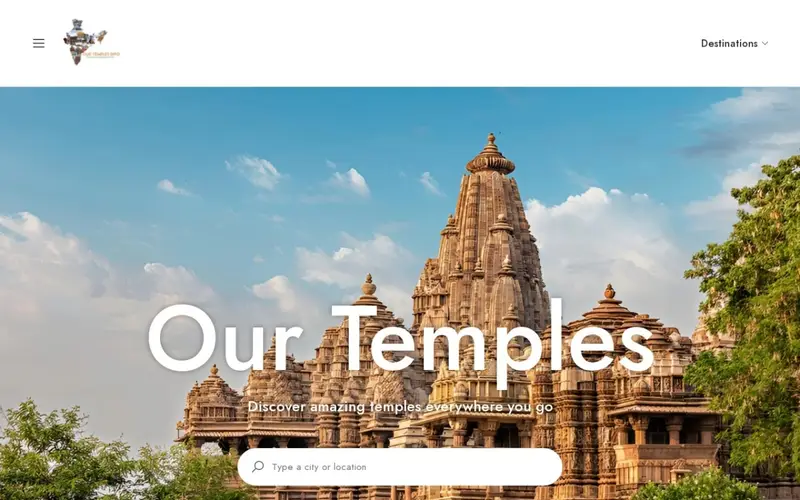
Our Temples, a temple directory I built, gives every temple page the same order: photo gallery and address, a map with directions, travel details such as the nearest airport, bus, train, taxi and parking, opening hours with an "Open now" status, then history, pooja details, dress code, festivals and a short FAQ. A temple's own website benefits from the same order, because pilgrims planning a visit ask the same questions.
Transparency for NGOs and trusts
- Registration details, 12A and 80G status with registration numbers, and FCRA registration if held.
- Your CSR-1 registration number if you seek CSR funding, since companies generally fund registered implementing agencies.
- Annual reports, audited accounts and the names of trustees or governing body members.
- Programmes shown with real photos and stories shared with consent, with extra care for children and beneficiaries, and impact figures only when you can back them up.
- A volunteer form that asks only what you need, with a consent line and privacy notice as India's DPDP Act expects.
Languages, readability and local search
Many devotees and supporters read Hindi, Marathi, Telugu or another regional language more comfortably than English. Timings, donation and contact pages are the first to translate, each language on its own URL with fonts tested for the script; Our Temples shows temple names and sections in Hindi and Telugu alongside English. See multilingual WordPress websites. Large text, plain menus and fast loading help older visitors on basic phones.
On Google, PlaceOfWorship schema (HinduTemple, for example) or NGO schema confirms your details, Event markup suits festival pages, and the Google Business Profile carries the same timings, including festival hours. See the Google Business Profile checklist.
What is included, and what is not
The list near the top of this page is what every temple or NGO site includes. These are separate or come from you:
- The payment gateway account and its fees. It is opened in your organisation's name; I configure it on the site.
- Tax and legal advice on 80G, 12A and FCRA, which comes from your CA.
- Translation. I set up the languages; the text should come from a fluent speaker.
- Photography, live-stream equipment and social media.
How long it takes
It depends on the number of pages, languages and whether sevas are booked online, and I confirm the timeline with the fixed quote. Gateway activation and gathering registration documents often take longer than the build, so start well before a major festival or appeal.
Who it is for
Temples and mandirs, religious and charitable trusts, NGOs, foundations and community associations, especially those still collecting donations only in person or by sharing bank details on WhatsApp.
How to prepare
- Registration certificates, and 12A, 80G, FCRA and CSR-1 details where held.
- Daily timings, the festival calendar, sevas and their offerings.
- History, activities and photos you have permission to use.
- The name of the person or team who will update the site.
What you get at the end
- A website on hosting in your organisation's name, with timings and events your team can update.
- A donation flow tested end to end, with automatic acknowledgements.
- Search Console connected, a walkthrough and a full backup, with optional maintenance if no volunteer can look after updates.
Send me your current website or social page for a free review and a fixed quote.